Cost of Concrete Driveway Installation in Covina, CA
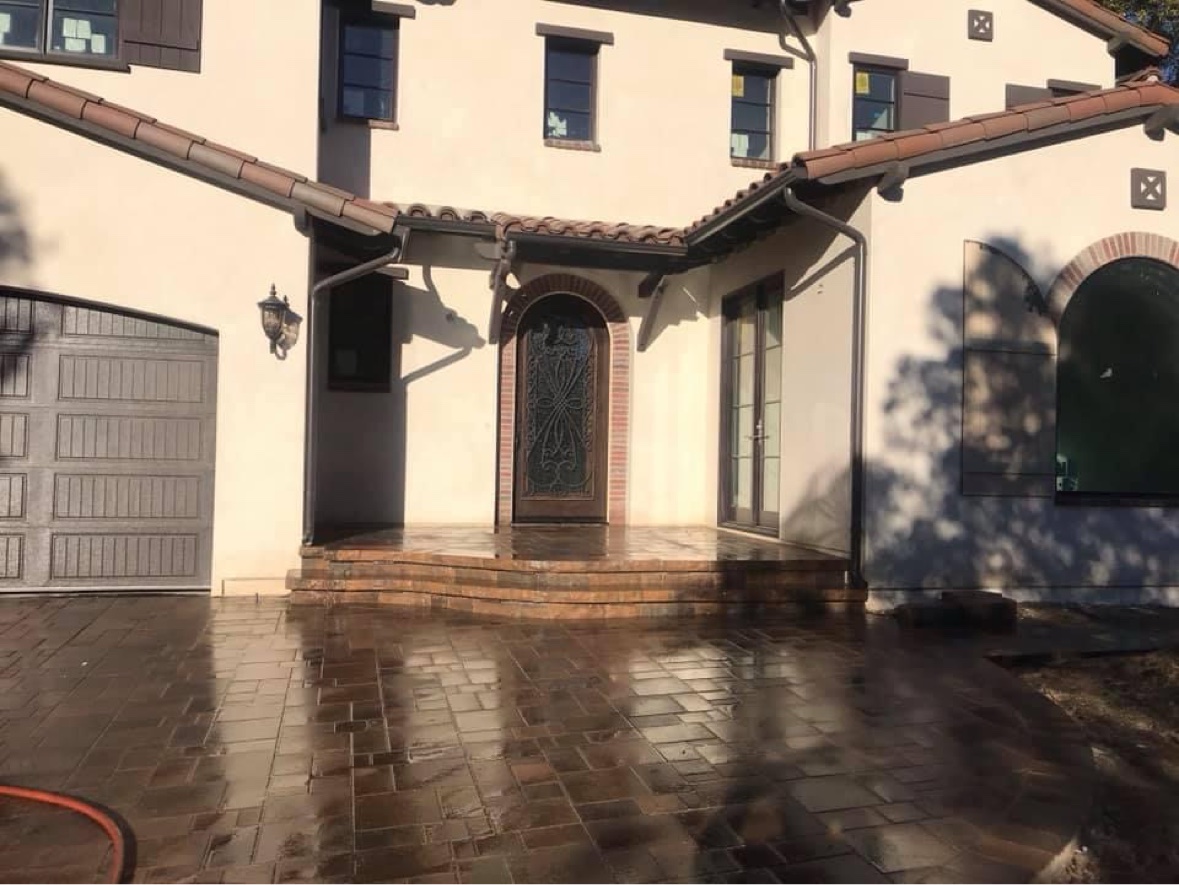
A driveway can look like a simple slab from the street, but the cost of concrete driveway installation is mostly determined below the finished surface. In Southern California, a driveway that is properly excavated, built on a compacted base, reinforced, jointed, and graded to drain will cost more than a thin pour over poor soil. It should. The first approach is built for decades. The second often leads to cracks, settling, standing water, and another project sooner than expected.
For a typical residential driveway, our installed concrete generally runs about $10 to $12 per square foot in the San Gabriel Valley, northern Orange County, and Inland Empire. That range is useful for early planning, but it is not a firm project price. The size of the driveway, condition of the existing concrete and soil, access for equipment, thickness, reinforcement, drainage needs, and finish all change the final number.
What Determines the Cost of Concrete Driveway Installation?
Concrete itself is only one part of the job. A dependable estimate accounts for demolition, hauling, excavation, base preparation, reinforcement, forming, placement, finishing, control joints, curing, cleanup, and any required drainage corrections. Skipping any of those steps may lower an initial quote, but it does not lower the risk of future repairs.
Driveway Size and Shape
Larger driveways generally cost less per square foot than very small ones because mobilizing a crew, concrete truck, tools, and equipment carries fixed costs. A simple rectangular driveway is also more efficient to build than a narrow side-yard pour, curved entry, circular drive, or layout with several transitions.
Driveway width matters beyond the square footage. A wider entrance may require more demolition at the sidewalk or curb area, additional forming, and careful grading to keep water moving away from the garage and foundation. If vehicles need to turn, park, or enter from a steep street, the layout needs to work in the real world, not just on a sketch.
Removal of Existing Concrete
Replacing an old driveway starts with breaking and hauling out the existing slab. Thick concrete, buried reinforcement, difficult truck access, and large amounts of debris all affect removal costs. A cracked slab may look ready to come out easily, but old driveways can be thicker at the apron, tied into walkways, or sitting over layers of previous patchwork.
Removal also reveals what is underneath. Soft soil, tree roots, poorly compacted fill, water-damaged base material, or old utility trenches may require additional excavation and repair before new concrete goes in. That is why an on-site assessment matters. A reliable contractor measures the work and looks for the conditions that can affect the build before giving a firm number.
Base Preparation and Soil Conditions
Base work is one of the clearest differences between a driveway that holds up and one that moves. The ground must be excavated to the proper depth, shaped for drainage, and compacted. Where conditions call for it, a compacted aggregate base creates a stable layer under the slab.
Southern California properties can have expansive clay soils, slopes, fill areas, and drainage patterns that change from one lot to the next. If the driveway has settled near the garage, ponded water along one edge, or cracked in several directions, the cause needs attention before the replacement is poured. New concrete installed over an unstable base simply inherits the same problem.
Concrete Thickness and Reinforcement
Most residential passenger-vehicle driveways are built with a slab thickness appropriate for normal car and light-truck traffic. Areas that see heavier vehicles, frequent delivery trucks, RVs, trailers, or commercial traffic may need a thicker design and more substantial reinforcement.
Rebar reinforcement adds cost, but it helps the slab act as a connected system when minor ground movement occurs. Properly placed steel is not a substitute for good base work, and good base work is not a substitute for reinforcement where reinforcement is needed. The durable approach uses both according to the driveway's conditions and traffic load.
Wire mesh, rebar, and slab thickness should be spelled out in the scope. If one quote is significantly lower than another, compare these construction details before deciding it is the better value. A lower number may be based on less excavation, thinner concrete, limited steel, or no allowance for correcting drainage.
Drainage Can Change the Price and Protect the Property
Concrete needs to be graded to drain. That sounds basic, but it is where many driveway projects fail. Water should move away from the garage, home, and low areas rather than collecting at the door, traveling toward the foundation, or spilling onto a neighboring property.
Correcting drainage may involve reshaping the driveway slope, adjusting transitions to walkways, installing a channel drain near a garage, or tying the work into an existing drainage plan. These details can add to the installation cost, yet they are often far less expensive than dealing with water intrusion, erosion, or premature slab damage later.
Driveway replacement is also a good time to look at the surrounding concrete. A patio, side yard, walkway, or front entry that drains into the driveway may need a coordinated solution. Treating each slab as an isolated surface can create new water problems at the connection points.
Finish Options and Their Effect on Price
A standard broom finish is practical, slip-resistant, and usually the most economical choice for a driveway. It gives the surface traction while keeping the look clean and straightforward.
Decorative finishes raise the price because they require additional materials, labor, protection, and timing. Colored concrete, stamped patterns, exposed aggregate, and staining can give a front yard a more custom appearance, but a driveway still has to perform first. The base, thickness, reinforcement, control joints, and drainage should be right before decorative upgrades are considered.
Control joints are especially important on large driveway panels. Concrete shrinks as it cures, and joints help guide cracking to planned locations. They do not guarantee that concrete will never crack, but properly placed joints make normal movement more controlled and less noticeable.
Access, Permits, and Site Conditions
A driveway with open access from a wide street is simpler to pour than one behind a gate, down a narrow side yard, or on a busy property with limited staging space. Concrete trucks, demolition equipment, and crew access all affect labor time and planning. In some locations, a pump may be needed to place concrete where a ready-mix truck cannot reach directly.
Permits or city requirements can also affect the scope, particularly when work reaches the public sidewalk, curb, parkway, or driveway apron. Commercial properties may have additional requirements for traffic loading, drainage, and ADA-compliant access. Those are not details to leave until the crew arrives. They should be identified during the estimate process.
Tree roots, utility lines, retaining walls, gates, irrigation, and landscaping are other common variables. Sometimes the right solution includes protecting nearby improvements. Other times, an obstruction must be removed or adjusted to create a driveway with the correct thickness and grade.
How to Compare Driveway Estimates
The lowest bid is not always the lowest total cost. Ask each contractor what is included in demolition and disposal, how deep the excavation will be, whether base material is included, what concrete thickness is planned, and what reinforcement will be installed. Also ask how control joints will be laid out and where water will drain when the job is complete.
A clear estimate should state the work rather than hiding behind a vague line such as "new concrete driveway." It should also identify exclusions, such as unexpected subgrade repairs or permit fees, so there are fewer surprises after demolition begins.
At J. Ortega Concrete, the process starts with an on-site assessment, measurements, and a direct discussion of traffic, drainage, access, and finish options. That allows the project price to reflect the actual driveway, not a generic square-foot guess.
Budget for the Work That Keeps Concrete Standing
If your current driveway is cracked, sinking, or holding water, focus first on why it failed. A good replacement is not just a fresh gray surface. It is a properly prepared system built thick, reinforced, jointed, and graded to drain. Get the scope in writing, compare the construction details, and choose the driveway you will not have to pay for twice.
Call (626) 404-8582 for a Free Estimate
Related Services
- Driveway installation — new driveways built to last
- Concrete repair — crack repair, leveling, and resurfacing
- Concrete patios — including tear-out and replacement
- Driveway reinforcement — rebar vs. mesh, and why the base matters more
- Protecting fresh concrete — curing done right from the pour
- Concrete sealer types — choose durable protection