Does a Concrete Driveway Need Reinforcement?
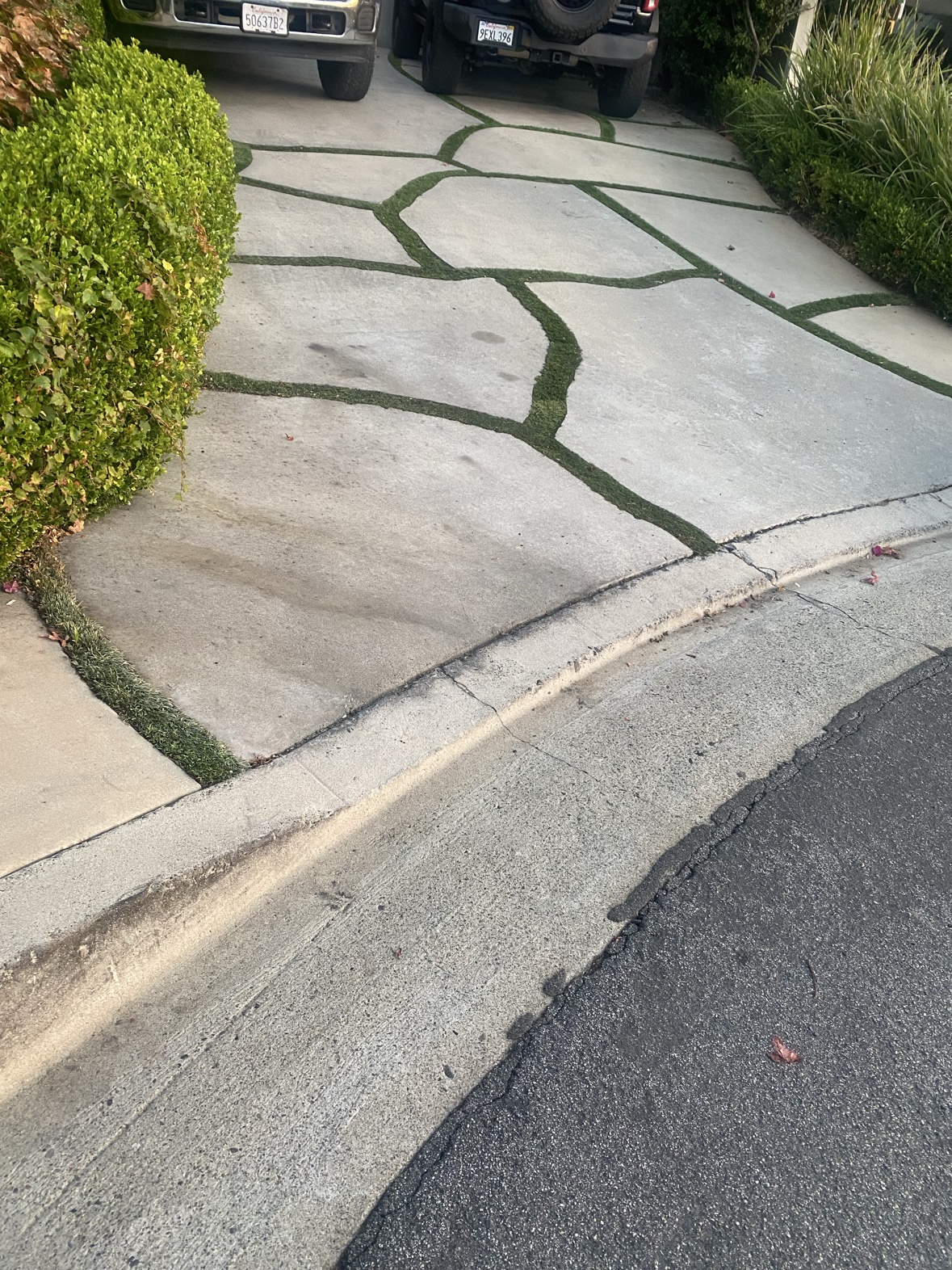
A driveway can look solid on pour day and still fail early if the work underneath it is weak. So, does a concrete driveway need reinforcement? In most Southern California driveway replacements, the answer is yes — but reinforcement is only one part of a driveway built to carry vehicles for decades. Proper base preparation, concrete thickness, control joints, and drainage matter just as much.
A few hairline cracks in concrete are normal. Wide cracks, settling slabs, broken edges, and tire-track depressions are not. Those problems usually point to movement below the slab, poor water control, thin concrete, or a driveway that was not built for the traffic it receives.
When a Concrete Driveway Needs Reinforcement
Most residential driveways benefit from reinforcement, particularly where passenger vehicles are parked daily or where heavier trucks, RVs, trailers, and work vehicles will use the surface. Reinforcement helps hold the concrete together after it cracks. It does not make concrete crack-proof, because all concrete shrinks as it cures and can crack over time.
The real benefit is crack control. Rebar or welded wire mesh helps keep adjacent sections of concrete aligned, reducing the chance that a crack opens up, creates a trip point, or allows an edge to move under vehicle weight. That matters most at driveway entrances, parking areas, turns, and sections exposed to repeated loading.
Reinforcement is especially worth including when the existing driveway has failed from settlement, when the property has expansive or disturbed soil, or when drainage sends water toward the slab. In the San Gabriel Valley, Inland Empire, and northern Orange County, soil conditions can vary substantially from one neighborhood to the next. A site inspection should look beyond the visible cracks and identify why the old driveway moved.
Rebar vs. Wire Mesh for Driveways
Rebar and wire mesh are both used in concrete work, but they are not interchangeable in every situation.
Rebar is the stronger choice for most driveway installations. It is placed in a grid and tied together so it stays positioned within the slab during the pour. A properly supported rebar grid provides dependable reinforcement across the driveway, especially where vehicles will regularly load the concrete. On our jobs, the standard build is a #3 rebar grid at 18 inches on center in a 4-inch, 3000 PSI slab — with thicker concrete and heavier steel where trucks, RVs, or poor soil call for it.
Wire mesh can provide crack-control support, but it must be installed correctly. Too often, mesh ends up lying at the bottom of the slab, where it offers little practical value. Concrete reinforcement needs to sit within the body of the concrete, not disappear into the base material. Chairs or other supports keep steel at the proper elevation while the concrete is placed.
For a standard driveway serving passenger vehicles, a contractor may recommend a properly placed rebar grid along with adequate slab thickness and a compacted base. For lighter-use walkways, mesh may be appropriate. For commercial traffic, delivery vehicles, or areas with heavier point loads, the reinforcement plan should be designed around actual use rather than a one-size-fits-all detail.
Reinforcement Does Not Replace a Good Base
The biggest misconception about driveway reinforcement is that more steel can compensate for poor preparation. It cannot.
Concrete needs a stable, compacted base beneath it. If loose dirt, soft soil, old broken concrete, roots, or poorly compacted fill remain under the new slab, the ground can settle. Once the slab loses support, even reinforced concrete can crack, rock, or sink.
A durable installation starts with removing failed material and excavating to the required depth. The subgrade should be shaped and compacted, then topped with suitable base material where conditions call for it. The finished base must be even and firm before any reinforcement or concrete goes down.
This is also where driveway thickness matters. A typical residential driveway is commonly poured at about 4 inches thick, but thicker concrete may be needed at the apron, in parking areas, or anywhere heavier vehicles will travel. A driveway used by an RV, work truck, trash truck, or loaded trailer needs a different conversation than a driveway used by two sedans.
Control Joints Are Part of the Reinforcement Plan
Control joints are the planned lines cut or formed into concrete to guide shrinkage cracks into less noticeable locations. They are not optional cosmetic lines. They are a structural detail that helps concrete behave predictably.
Without properly spaced control joints, concrete will still crack, but it may choose an irregular path across the driveway. Reinforcement helps limit movement at a crack, while control joints help determine where that crack is most likely to occur. The two work together.
Joint layout should follow the shape and size of the driveway. Long, narrow sections, irregular additions, and wide parking pads need thoughtful joint placement. Joints also need to be cut at the right time and deep enough to do their job. Waiting too long after the pour can allow random cracking to start before the joints are in place.
Expansion material may also be needed where new concrete meets a garage slab, sidewalk, foundation, wall, or other fixed structure. Concrete expands and contracts with temperature changes. Giving it room to move helps protect both the new driveway and the structure beside it.
Drainage Can Decide How Long a Driveway Lasts
Water is one of the main reasons concrete driveways deteriorate before their time. Water that sits on the surface can stain concrete, create slippery areas, and work its way into joints and cracks. Water that runs beneath the slab can soften soil, wash out support, and lead to settlement.
A driveway should be graded to drain water away from the garage and home. That may mean creating the correct slope across the slab, directing runoff toward the street where appropriate, or addressing nearby landscape and drainage conditions that feed water back toward the concrete.
This is particularly important when replacing a driveway with visible low spots or cracks that widen after rainy weather. Pouring new concrete over the same drainage problem only gives the problem a new surface. The work should fix the cause, not just cover the evidence.
Situations That Call for Extra Reinforcement
Some driveways need more than a basic rebar layout. A stronger design may be appropriate if the property has poor or expansive soil, a steep driveway, a wide parking area, frequent heavy vehicles, or an area where vehicles turn sharply. Tire pressure from turning vehicles can stress concrete more than straight-in parking.
Driveway approaches and aprons also deserve attention. These areas often carry concentrated loads as vehicles enter from the street, and they can be affected by curb conditions, gutter flow, and transitions to public improvements. A contractor should evaluate the entire approach instead of treating it as an afterthought.
If a new driveway will include decorative concrete, such as stamped, colored, stained, or exposed aggregate finishes, the construction basics still come first. Decorative work can improve curb appeal, but it should sit on a slab that is thick, reinforced, properly jointed, and graded to drain. Appearance lasts longer when the structure below it is right.
What to Ask Before Approving a Driveway Quote
A low price does not tell you whether a driveway is being built correctly. Before moving forward, ask how deep the excavation will be, what base preparation is included, what thickness is planned, and whether rebar or mesh will be used. Ask how the reinforcement will be supported during the pour and where control joints will be placed.
You should also ask how water will drain after the project is complete. If the old driveway settled, cracked badly, or held standing water, ask what is being changed to prevent the same failure. A clear answer should address the underlying soil, base, thickness, joints, and drainage — not simply promise stronger concrete.
At J. Ortega Concrete, driveway assessments focus on those construction details before a firm project price is given. The goal is a driveway that looks clean on day one and stays stable through daily use, heat, rain, and years of vehicle traffic.
The right reinforcement depends on the driveway, but the standard should stay the same: build from the ground up. When the base is compacted, the slab is thick enough, steel is placed correctly, joints are planned, and water has somewhere to go, your driveway has a real chance to perform the way it should.
Call (626) 404-8582 for a Free Estimate
Related Services
- Driveway installation — new driveways built to last
- Driveway installation cost — what drives the price
- Concrete repair — crack repair, leveling, and resurfacing
- Protecting fresh concrete — curing done right from the pour
- Concrete sealer types — choose durable protection